The 2nd International Symposium with the Korea Institute of Radiological and Medical Sciences (KIRAMS) was held
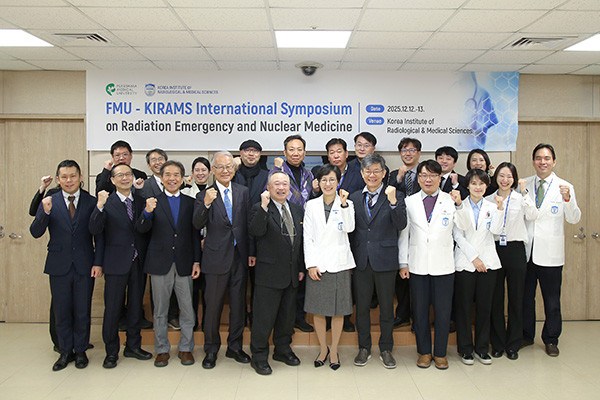
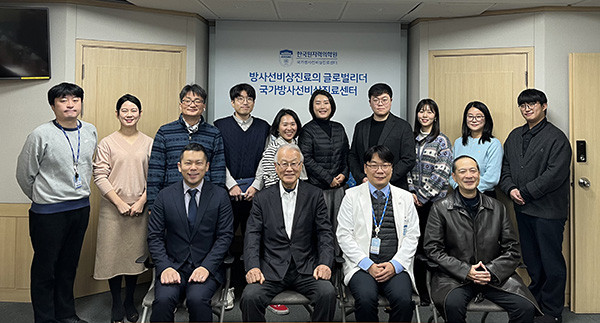
On December 12, 2025, Fukushima Medical University (FMU) and the Korea Institute of Radiological and Medical Sciences (KIRAMS) held their second joint international symposium at KIRAMS in Seoul, South Korea, based on the MOU signed by both institutions in February 2025, focusing on radiation emergency and nuclear medicine specialties. The symposium featured lively discussions on key themes including the production of radioactive isotopes, targeted alpha therapy, clinical applications of radiotheranostics, regulatory compliance, emergency exposure protocols and nuclear disaster medical countermeasures, education and training for medical personnel, risk communication, and international cooperation.
At the symposium’s opening, KIRAMS President Jin Kyung LEE expressed her fervent expectations, stating, "Today's meeting is not merely a formal gathering. It is an opportunity to discuss frankly and sincerely what we wish to achieve." Additionally, FMU President Seiichi TAKENOSHITA expressed his aspirations, stating, "International partnerships like ours are essential for accelerating discovery, sharing expertise, and ultimately delivering better outcomes for patients and communities in both of our countries. I sincerely hope that today’s discussions will spark new collaborative projects and strengthen our academic ties.
The symposium began with the introduction of initiatives concerning the nuclear medicine departments of both institutions. From KIRAMS, Dr. Kyo Chul LEE reported on the production of medical radioisotopes utilizing KIRAMS' three cyclotrons and future clinical trial plans. Representing FMU's Nuclear Medicine Department, Professor Noboru ORIUCHI introduced progress in targeted alpha therapy research using Astatine-211 (211At) and, based on questions regarding challenges for its practical application, future prospects were discussed. The importance of integrated diagnostic and therapeutic approaches within the framework of radiotheranostics was also emphasized.
Subsequently, regarding the field of radiation emergency medicine, Dr. Minsu CHO, Director General of KIRAMS' National Radiation Emergency Medical Center (NREMC), introduced the NREMC's mission. Professor Arifumi HASEGAWA, from FMU’s Department of Radiation Disaster Medicine, then presented on education and training programs for emergency radiation exposure and nuclear disaster medicine at FMU, based on lessons learned from the Fukushima Daiichi Nuclear Power Plant Accident. Professor HASEGAWA emphasized how the cooperative relationship established through the MOU has made both institutions' activities meaningful and highlighted the significance of collaboration between the two institutions, considering recent international circumstances.
Finally, as a special lecture, FMU Vice President Shunichi YAMASHITA delivered a presentation titled "Health Risk Management after the Fukushima Nuclear Power Plant Accident." He introduced how the accident and subsequent Radiation Medical Science Center for the Fukushima Health Management Survey (https://fhms.jp/en/) reaffirmed the importance of accurate understanding of radiation risks and public health responses. He further introduced ongoing efforts to strengthen human resource development and research infrastructure for the future, based at the Fukushima Institute for Research, Education and Innovation (F-REI), addressing both recovery from the nuclear disaster and nuclear medicine research.
Through presentations and discussions at this symposium, participants from both institutions gained an understanding of each other's strengths and identified specific action items for future implementation to leverage these strengths. Both institutions agreed to continue close cooperation toward the sustainable development of targeted alpha therapy centered on 211At and the further strengthening of international collaboration in the field of radiation emergency medicine.
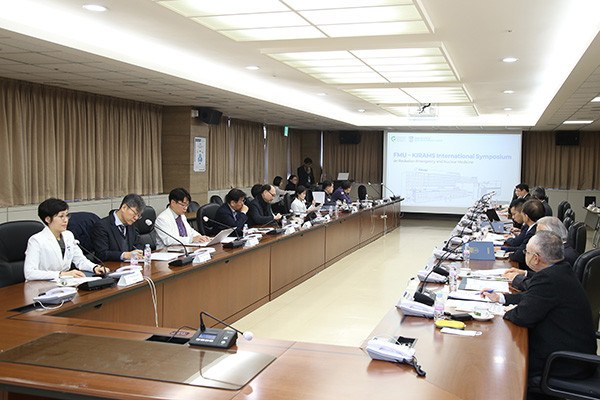
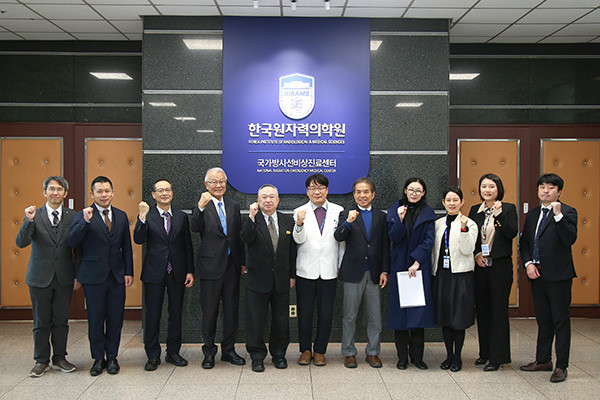
On the next day, December 13, a WHO-REMPAN (World Health Organization-Radiation Emergency Medical Preparedness and Assistance Network) Regional Session was held in the KIRAMS-NREMC conference room. Following a report by Assistant Professor Kazuki SUGAYA (Department of Radiation Disaster Medicine, FMU) on activities related to radiation disaster medicine, 11 young participants engaged in a lively and candid exchange of views. They discussed how to attract and cultivate future generations to work in critically important yet understaffed clinical and research disciplines related to radiation accidents and nuclear disaster medicine. Director General Dr. Minsu CHO introduced ideas for a global exchange program under the WHO-REMPAN framework to educate and train young candidates. Both institutions agreed to collaborate on addressing this challenge moving forward.
Japanese version is here.