
Medical Students Share Insights from Their Clinical Rotations Abroad at this Year’s Second International Exchange Presentation Session
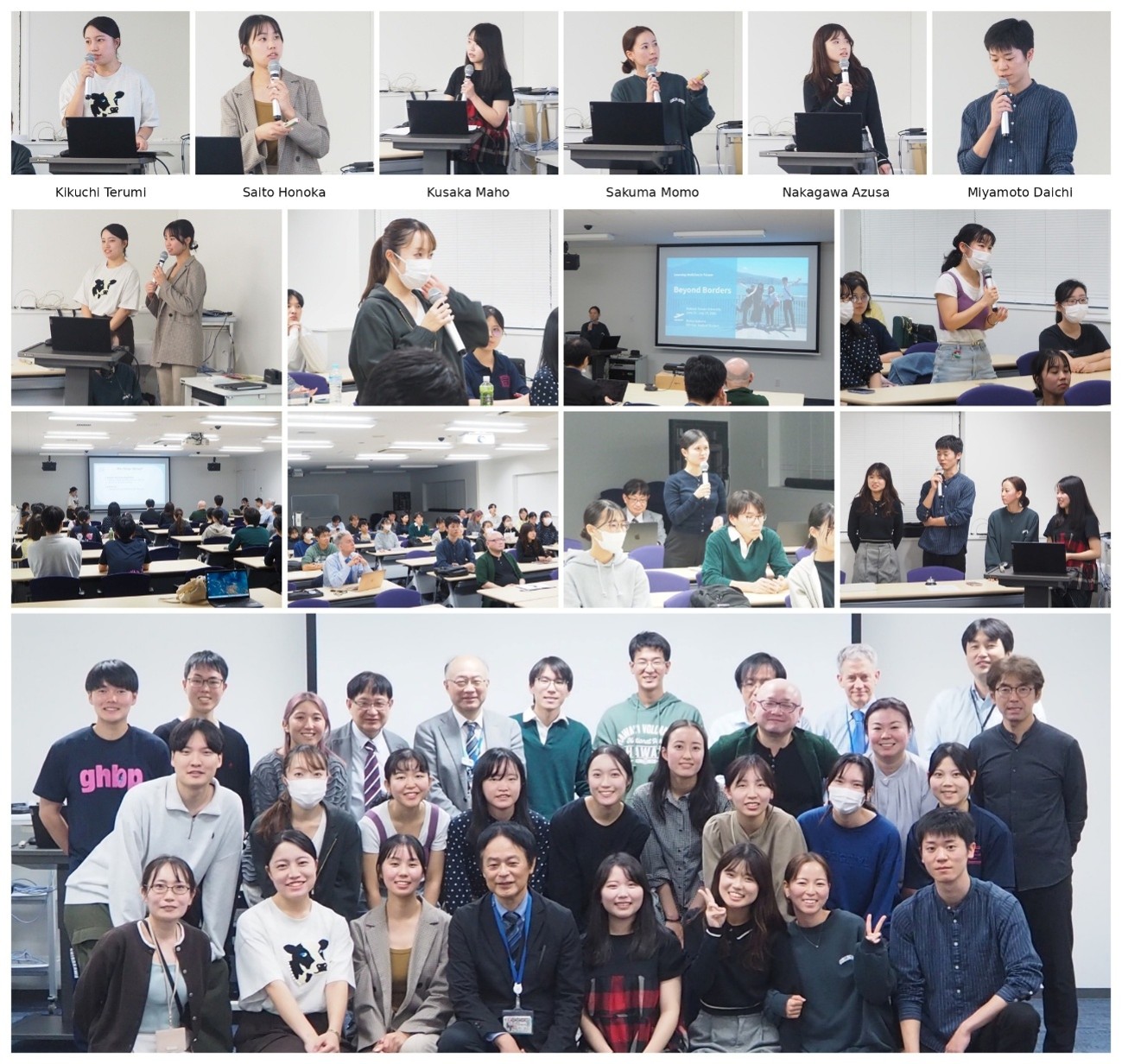
On October 15, 2026, six Fukushima Medical University (FMU) students described their recently completed clinical rotations at the Icahn School of Medicine at Mount Sinai (New York City) and National Taiwan University College of Medicine (Taipei), highlighting what they had learned, the connections they had made, and the challenges they had encountered during their time abroad. This event convened in FMU’s Disaster Medicine and Medical Industry Building.
Terumi Kikuchi and Honoka Saito, who trained at the Icahn School of Medicine at Mount Sinai, reflected on their clinical experiences, including patient communication and the ways in which healthcare systems influence treatment options. They also described how interacting with local physicians and medical students had encouraged them to think more deeply about their future careers. Their presentations further highlighted the importance of sharing Fukushima's unique experiences with an international audience.
Maho Kusaka, Momo Sakuma, Azusa Nakagawa, and Daichi Miyamoto, who trained at National Taiwan University, shared their experiences across a range of clinical specialties, including medical oncology, pathology, emergency medicine, cardiology, obstetrics and gynecology, neurosurgery, and cardiovascular surgery. Through their participation in clinical practice and medical conferences, they gained firsthand insight into differences between the healthcare systems and clinical training environments in Japan and Taiwan. These experiences also provided an opportunity to reflect on medical practice in Japan from a broader perspective.
A common theme throughout the presentations was the challenge of communicating in medical English and the importance of taking an active approach to learning. Across differences of language and culture, the students described their efforts to ask questions and participate in discussions, greatly aided by the support and encouragement of local physicians and fellow students. Many expressed how inspired they had been by the multilingual proficiency and proactive attitudes of the students they met.
During Q&A, participants discussed differences in clinical training between Japan and other countries, as well as the types of students who might benefit most from studying abroad. The discussion emphasized that students do not need to have a clearly defined career path before pursuing an international experience. Studying abroad can help them discover new interests and perspectives, with the main prerequisites being curiosity, initiative, and a willingness to engage actively in the learning process.
The session provided a valuable opportunity for returning students to share their experiences with the FMU community at large, and in particular, with other students considering clinical training abroad.
Japanese version is here.