Steadily Developing Bridge Connects Global Health and Fukushima’s Community Care
FMU Faculty Join Harvard Chan School’s “Strengthening Community Health in Japan” Course
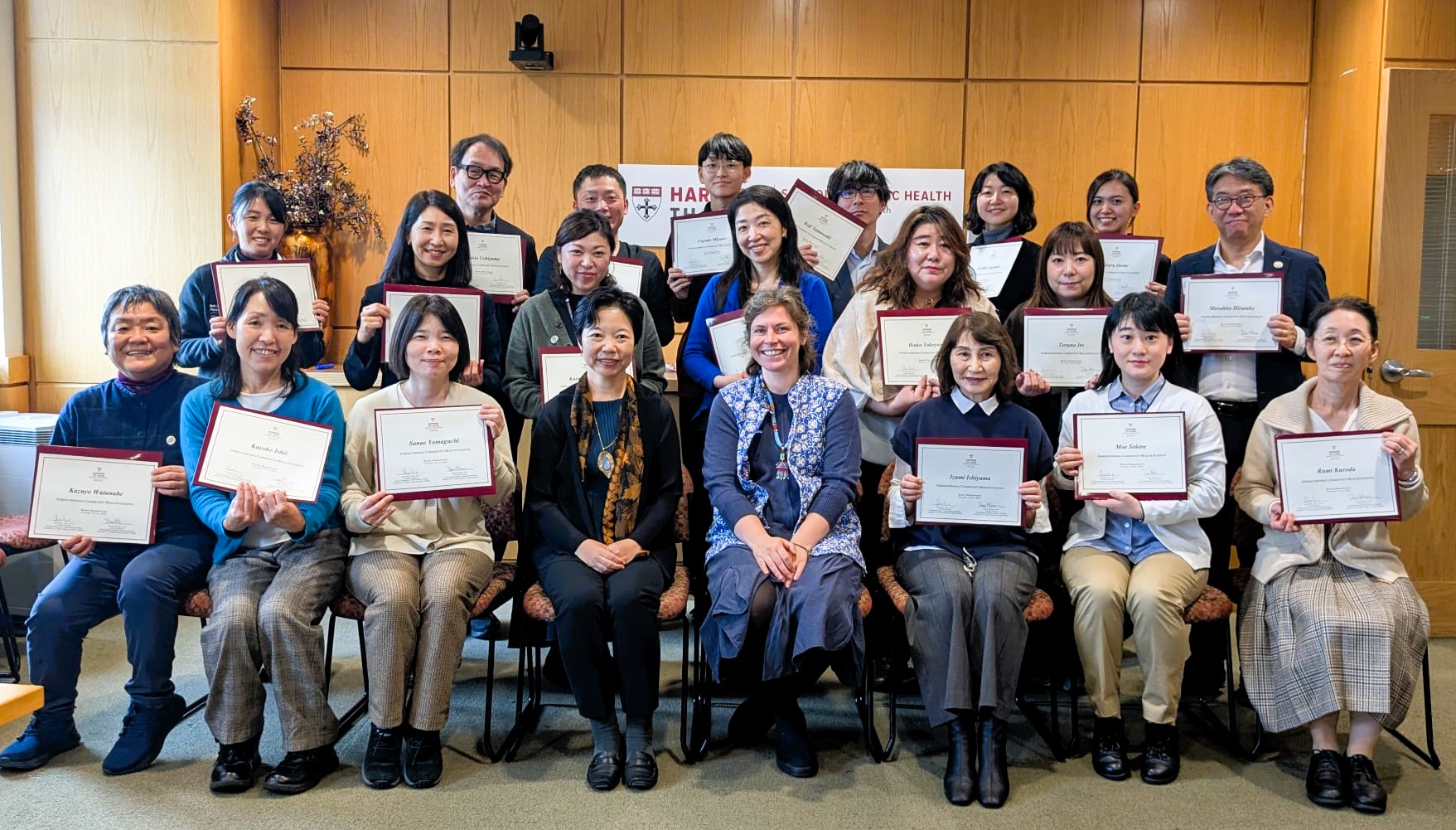
An intensive educational course titled “Strengthening Community Health in Japan” was hosted by the Harvard T.H. Chan School of Public Health in the Boston area from October 27 to 31, 2025.
The course was planned and led primarily by Professor Aya Goto of the Harvard T.H. Chan School of Public Health, targeting approximately 20 Japanese healthcare professionals, including faculty members from Schools of Nursing and Medicine at FMU. This initiative demonstrates the steady progress of the "Bridge between the World and Fukushima," designed to share and further advance the expertise and insights gained in Fukushima during the post-Great East Japan Earthquake recovery.
Building Strategies for Community Health from an International Perspective
The goal of the course was for participants to review Japan's successful universal health coverage and their own regional practices from a global perspective, and to discuss practical strategies for improving local health systems and services.
Participants acquired cutting-edge knowledge essential for enhancing community health, including Health System Thinking, Health Literacy, Community Engagement, and the Social Determinants of Health (SDOH). They also visited local nursing school facilities and observed educational practices. In group work, Fukushima's experience was used as a key case study, prompting in-depth discussions on lessons learned from disasters and pandemics, as well as the future roles of nursing professionals. Participants developed strategic projects aimed at solving specific challenges in their home regions and presented their outcomes on the last day of the course.
Participant Voices: A Commitment to Local Impact
Participants, including those from FMU, expressed strong motivation to integrate these new approaches into community health. The following highlighted comments were from the School of Nursing, which had the largest number of participants. (Excerpts below)
Professor Rumi Kuroda (School of Nursing): Creating meeting places for nurses to counsel residents about health and daily life. "I realized the commonality between community health activities and the perspective of nursing care for an individual, and deeply felt the importance of learning an international perspective. I experienced both the challenge and the appeal of developing concrete strategies for how nursing professionals can support residents in areas with limited access to medical resources and how to enhance health literacy across the entire community."
Professor Naoko Sato (School of Nursing): Employment continuity among working-age cancer patients, (alongside a Hinohara Fellow, a Takemi Fellow, and a participant from the University of Guam). "Through analysis using the Project Design Matrix, I gained a deep understanding of the need to strengthen collaboration among stakeholders—patients, families, healthcare institutions, and companies—from the viewpoints of health literacy and social capital, and recognized the necessity of developing new educational programs."
Professor Sanae Yamaguchi and Lecturer Kayoko Ishii (School of Nursing): Members of the group addressing the issue of Mothers Unable to Enjoy Parenting. "We analyzed a severe reality that suicide is the leading cause of maternal death after childbirth from psychological and social factors, and gained significant insights by discussing the effectiveness of community support models to enhance mothers' readiness to accept necessary support."
Lecturer Sachiko Sugimoto (School of Nursing): Creating meeting places for nurses to counsel residents about health and daily life. “By identifying changes in Japanese household structures and challenges within the healthcare delivery system, we strategically addressed how to leverage the strengths of nurses—who can holistically view the health and lives of local residents—drawing insights from frameworks like The Getting Health Reform Right model.”
Future Outlook
It is expected that the advanced from Harvard University knowledge acquired by these Japanese healthcare professionals will lead to more evidence-based and internationally consistent comprehensive practices in medical, nursing, and public health across their regions.
Specifically, the faculty members from our university’s Schools of Medicine and Nursing will feed this learning back into our education, research, and community contributions. This is anticipated to significantly contribute to the qualitative improvement of community health in disaster-affected Fukushima Prefecture and the development of the next generation of healthcare professionals. Training for the next year is scheduled for November 2–6, 2026. We encourage participation from all faculties.
Japanese version is here.